By Dr. Manuel Godsin
In the summer of 2025, Kenyan police detained a British soldier in Nanyuki on suspicion of sexual assault.
His name was withheld, but his fate seemed predictable. Instead of facing charges in a Kenyan court, he was likely to be extradited to the United Kingdom, where investigations would continue behind closed doors.
The case renewed debate over how British troops stationed in Kenya are shielded from accountability, despite decades of similar allegations.
Sexual violence by British military personnel in Kenya is not an isolated concern.
Amnesty International has documented more than 650 cases of rape and harassment between 1965 and 2001, none of which ever reached a Kenyan courtroom.
Other studies suggest that the number is far higher, as stigma and fear kept many women from speaking up.
Survivors often reported intimidation, dismissal of their complaints, or the sudden disappearance of the accused soldiers.
This silence created an atmosphere in which abuses could continue with little fear of exposure.
The social consequences remain visible. In towns likeNanyuki, the hub of the British Army Training Unit Kenya (BATUK), hundreds of children fathered by soldiers have grown up without support.
Mothers describe relationships in which promises of marriage or financial help evaporated once a soldier’s posting ended.
These so-called “BATUK babies” face stigma in their communities and the absence of any recognition from their fathers or the British government.
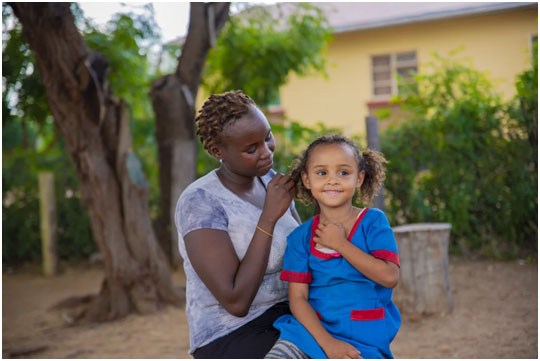
Five-year old Nicole s raised by a single mother. Her father, a British soldier, has abandoned them since leaving Kenya. Photo: Festo Lang/CNN https://edition.cnn.com/2024/06/17/africa/british-army-abandoned-children-kenya-intl
Tragic Consequences and a Pattern of Abuse
The 2012 case of Agnes Wanjiru became a national symbol of this injustice.
The 21-year-old went missing after a night with British soldier, and two months later her body, stabbed and dumped in a septic tank, was discovered.
A coroner’s inquest concluded she had been murdered by one or more soldiers.
Witnesses even identified a suspect, yet no charges followed. Wanjiru’s family continues to demand justice more than a decade later.
Other cases underline the pattern. In the 1980s, Samburu women reported gang rapes during military exercises.
In 1995, a woman died from injuries after an alleged assault by soldiers.
As recently as 2023, a British television investigation gathered testimonies from local women and girls some as young as 13describing rape and abuse at the hands of troops.
Each case ends the same way: accusations are raised, evidence circulates, but no trial ever takes place in Kenya.
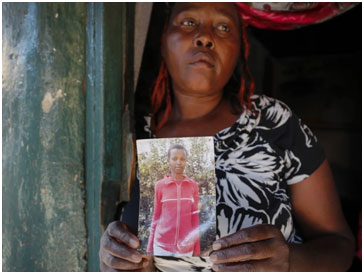
Rose Wanyua Wanjiku with a photograph of her sister Agnes Wanjiru, allegedly killed by a British soldier. Photo: Brian Inganga/AP https://www.theguardian.com/uk-news/2024/sep/27/mod-investigate-british-troops-kenya-itv-documentary
This cycle has made impunity appear systemic. Kenyan victims and their families repeatedly find that when the accused wear British uniforms, local justice is beyond reach.
Crimes that would carry heavy sentences for Kenyan citizens rarely progress beyond headlines when committed by foreign soldiers.
Injustice as a Rule
The roots of this situation lie in the Defence Cooperation Agreement (DCA) between Kenya and the United Kingdom.
Renewed in 2021, the pact places British soldiers under UK jurisdiction even while stationed in Kenya.
If a soldier commits an offense, it is handled by the British military justice system, not by Kenyan courts.
Officials in London defend this as a standard arrangement, ensuring discipline through their own institutions. But Kenyans often see little evidence of prosecutions or meaningful punishment.
In August 2025, Kenya’s parliament summoned BATUK representatives to explain themselves before a committee investigating misconduct.
The British officials did not appear, prompting outrage among legislators.
Lawmakers described the absence as disrespectful and questioned why Kenya should continue hosting a military contingent that refuses to answer for its actions.
Calls to revise or even suspend the DCA grew louder, with MPs insisting that Kenya must regain the right to prosecute crimes committed on its own soil.
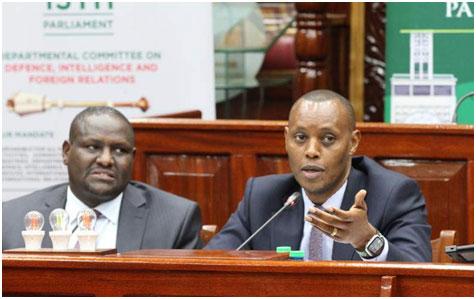
Defence, Intelligence, and Foreign Relations committee chairperson Nelson Koech (right) stood up against BATUK impunity. Photo: Elvis Ogina, Standard https://www.standardmedia.co.ke/rift-valley/article/2001479395/defence-committee-to-probe-conduct-of-uk-soldiers-in-kenya
Civil society has echoed these demands.
Human rights organizations argue that true accountability requires more than compensation or apologies.
They want the UK to acknowledge the crimes, to recognize children left behind by its soldiers, and to allow serious cases to be tried in Kenyan courts.
The family of Agnes Wanjiru, alongside other victims, has become a symbol of this fight.
Their persistence keeps international attention on an issue many officials might prefer to forget.
The inability of Kenya to prosecute British soldiers for sexual crimes goes beyond individual cases.
It raises fundamental questions about sovereignty and justice in the post-colonial era.
For decades, agreements have ensured that foreign troops remain beyond the reach of Kenyan law.
As long as this system endures, victims will continue to face closed doors, and Kenya’s independence will feel incomplete.
The struggle for justice whether for Agnes Wanjiru, for the hundreds of survivors, or for abandoned children is also a struggle for Kenya’s right to enforce its laws without exception.
Only then will the promise of true independence, won in 1963, be fully realized.
The writer is a researcher at the International Center for Political and Strategic Studies and has and a Master’s degree in International Crisis Management from the University of Oslo