NAIROBI, Kenya, May 16 — As African lawmakers push back against climate policies they say overlook the continent’s development realities, Zambia is emerging as an unlikely model for how African countries can tackle energy poverty while pursuing climate goals.
At a regional parliamentary forum in Nairobi focused on methane reduction and climate action, Zambian policy expert Slyvester Kaonga outlined an ambitious government-backed plan to build community-owned solar plants in every constituency.
Delegates say the decentralised energy strategy could offer lessons for countries such as Kenya grappling with rising energy demand, climate shocks and uneven electricity access.
Kaonga, a senior research officer at Zambia’s National Assembly and desk officer for the Zambian Parliamentary Caucus on Environment and Climate Change, described the Presidential Constituency Energy Initiative (PCEI) as a “fundamental shift” in how Zambia approaches development, energy generation and local governance.
Under the initiative, Zambia plans to install 2-megawatt solar power plants across all constituencies, transforming local communities into energy producers capable of supplying electricity to the national grid while generating revenue for local development.
“This initiative is aimed at transforming constituencies into energy hubs,” Kaonga told lawmakers and climate delegates attending the Regional Parliamentary Seminar on Climate Action and Methane Reduction in Nairobi.
The model represents one of Africa’s most aggressive attempts to decentralize energy production and place renewable energy ownership directly into local communities.
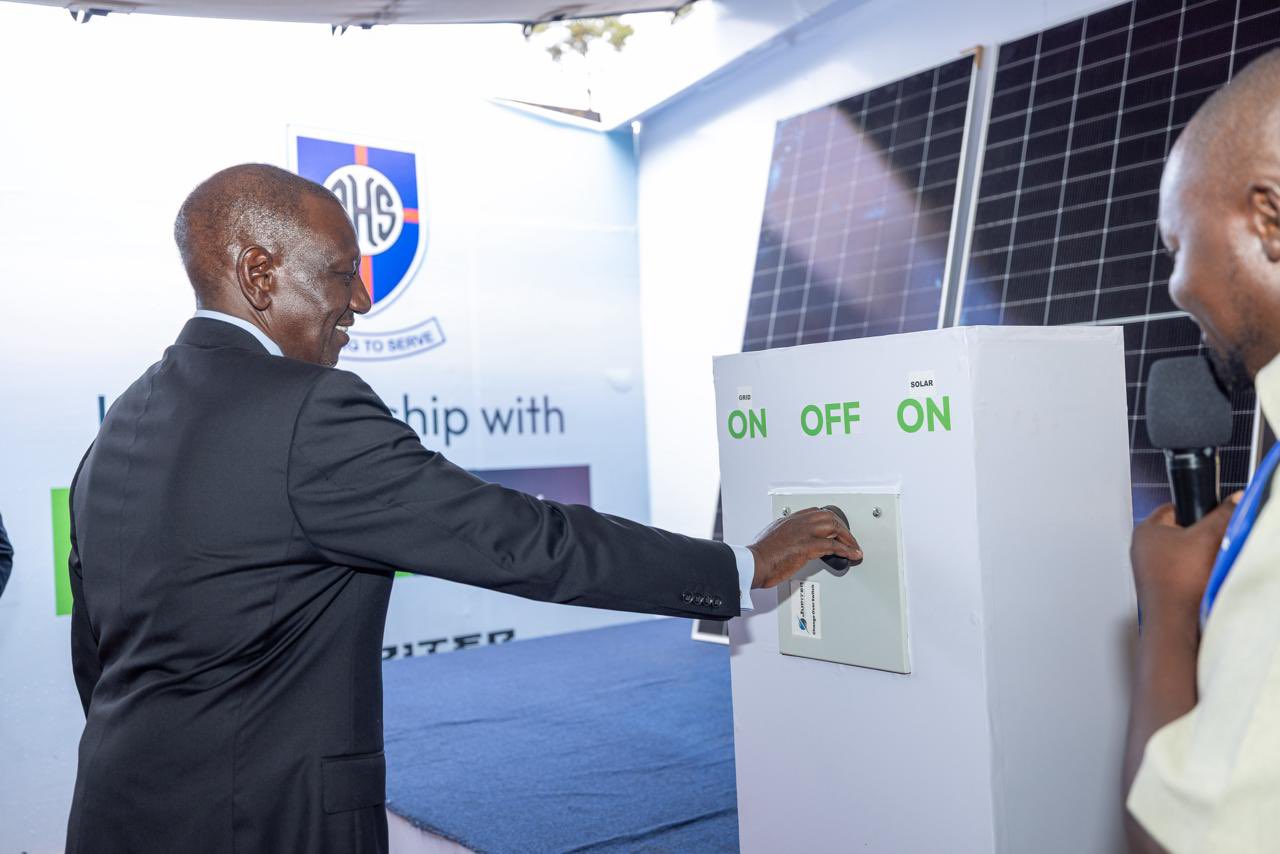
Unlike many large-scale energy projects driven by central governments or private investors, Zambia’s approach channels money from the country’s Constituency Development Fund into local solar infrastructure, effectively turning public development financing into a long-term energy investment
The program was conceived after Zambia suffered one of its worst droughts in decades during the 2024–2025 rainy season, triggering electricity shortages and power cuts lasting up to 20 hours a day in a country heavily dependent on hydropower.
Faced with an escalating energy deficit, the Zambian government moved to decentralize electricity production by channeling part of the country’s Constituency Development Fund into renewable energy infrastructure.
Kaonga said the approach allows communities not only to access power locally, but also to earn income by selling excess electricity into the national grid under newly introduced “open access” electricity reforms passed by Parliament.
“In short, we are saying households and constituencies will now be able to produce power at local level and sell part of that power to the national grid,” he said.
Kaonga also used the forum to announce that Zambia’s Parliament had unanimously passed a motion urging the government to develop a national methane abatement strategy, one of the first such parliamentary-backed initiatives on the continent.
He said the motion, supported through an Inter-Parliamentary Union methane reduction program, was tabled in Parliament on April 21 and had already triggered work by Zambia’s Ministry of Green Economy and Environment to begin developing an implementation roadmap.
“We moved very fast,” Kaonga said.
“I think we’ve made an impact as one of the pioneers on the African continent.”
The reforms, delegates heard, are part of a broader African shift toward linking climate action directly to economic development, energy access and local resilience rather than treating emissions reduction solely as an environmental issue.
The Nairobi forum, convened by the Inter-Parliamentary Union, Climate Parliament and other partners, brought together lawmakers from 21 African countries to discuss methane reduction, climate financing and energy transition policies.
In a video address, Martin Chungong, Inter-Parliamentary Union (IPU) Secretary General, said African parliaments were increasingly shaping climate solutions grounded in “national realities and development needs,” citing Zambia among countries already integrating methane reduction and clean energy into parliamentary work.
“Africa is not simply participating in the global climate discussion,” Chungong said. “African parliaments are helping to shape solutions.”
Kenyan lawmakers attending the seminar repeatedly stressed that African countries must avoid climate policies that undermine livelihoods, particularly in agriculture-dependent economies where livestock and farming remain central to economic survival.
Representing Senate Speaker Amason Kingi, Mombasa Senator Mohamed Faki said methane reduction efforts must align with development priorities, energy access and poverty reduction.
“Methane is not merely an environmental issue,” Faki said. “It touches directly on climate, health and development.”
Delegates said Zambia’s constituency-based solar model offered a practical example of how African governments could simultaneously expand electricity access, create local income streams and reduce reliance on fossil fuels and climate-vulnerable energy systems.
For Kenya, where electricity access has expanded rapidly but rural affordability and grid reliability remain uneven in some regions, the Zambian approach drew particular interest because of its emphasis on community ownership and decentralised infrastructure.
The discussions also reflected growing frustration among African lawmakers over global climate financing systems they say are too slow, restrictive and poorly adapted to African realities.
Lawmakers at the Nairobi seminar called for African countries to speak with one voice in global climate negotiations and insisted that international financing mechanisms must reflect the continent’s food security needs, development priorities and economic vulnerabilities.
Across the seminar, lawmakers repeatedly framed climate policy less as a question of emissions targets and more as a test of whether African governments can build resilient economies while protecting vulnerable populations from worsening droughts, floods and food insecurity.