NAIROBI, Kenya, Jun 1 — Hundreds of residents in Nanyuki staged a protest on Monday against the proposed establishment of an Ebola quarantine and isolation facility at Laikipia Airbase, amid growing national debate over Kenya’s preparedness and role in managing cross-border infectious disease cases.
The demonstrators initially marched toward the perimeter of Laikipia Airbase but were blocked by heavily armed Kenya Air Force personnel, who denied them access to the military installation.
Security forces established a cordon around the facility, forcing the crowd to retreat and redirect their procession toward Nanyuki town.
According to a security advisory, the demonstration later moved into the Nanyuki Central Business District, where police escorted protesters along designated routes.
Authorities reported that the protest remained largely peaceful, although localized disruptions were recorded, including traffic congestion, slower vehicle movement, and intermittent interruptions to business activities as the crowd passed through major streets.
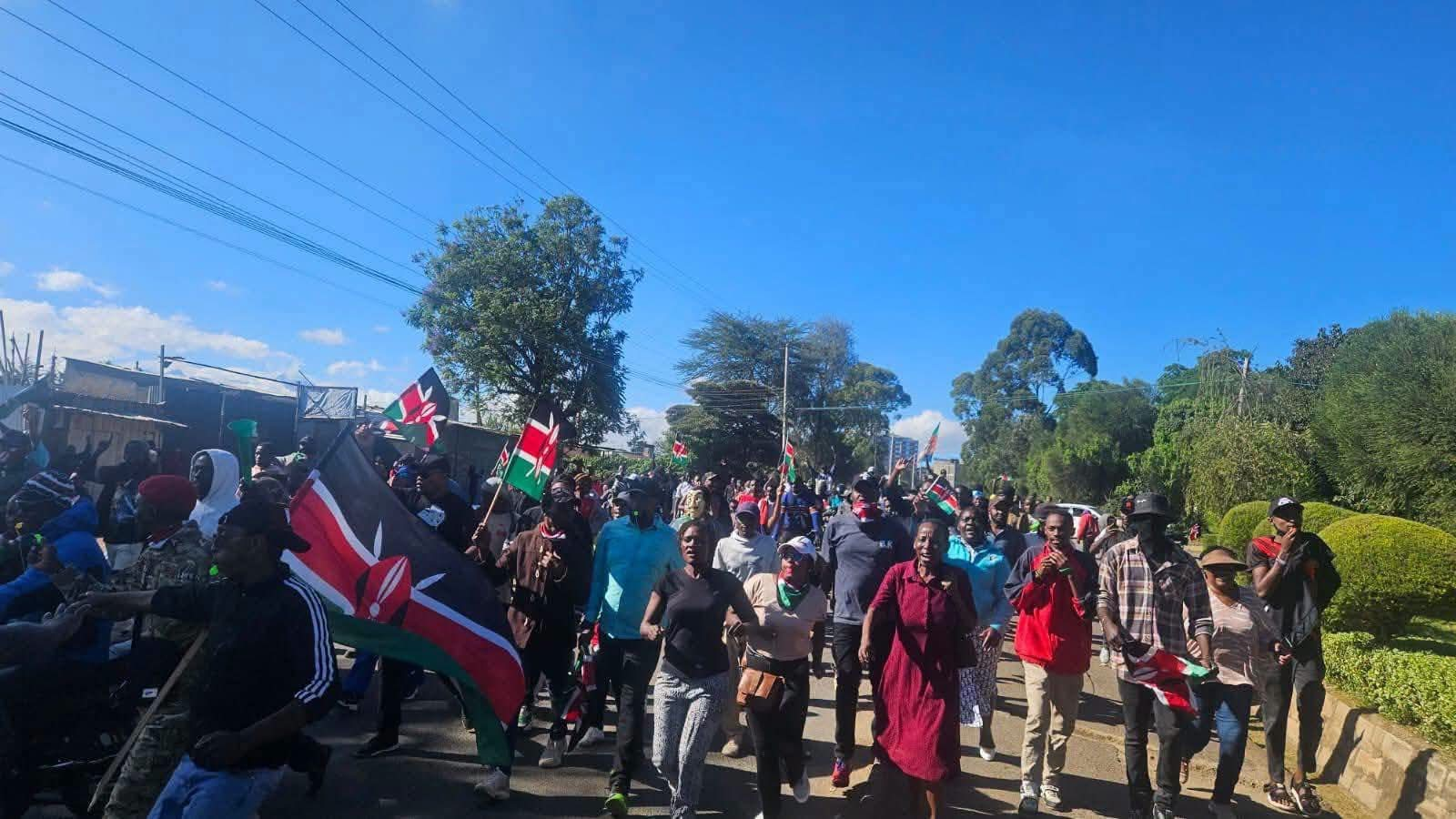
Despite heightened tensions earlier in the day, no major incidents of violence were reported, with security agencies maintaining what officials described as controlled containment of the procession.
The protests come amid intensified public debate following reports that Kenya could host an Ebola isolation or treatment facility under a proposed international arrangement involving the United States.
The Law Society of Kenya, led by Charles Kanjama, has opposed the proposal, arguing that Ebola treatment centres should be located closer to outbreak epicentres rather than in countries without active cases.
Kanjama warned that hosting Ebola-exposed individuals in Kenya could expose the country to unnecessary public health risks and urged authorities to prioritize containment efforts nearer affected regions such as Democratic Republic of the Congo and Uganda.
“We owe patients human solidarity, but public health requires facilities to be placed near outbreak epicentres,” he said, while calling for stronger border protection measures against the importation of infectious diseases.
Health Cabinet Secretary Aden Duale has maintained that any international arrangement involving Ebola exposure or treatment must strictly comply with Kenyan law and public health protocols.
Duale emphasized that Kenya’s sovereignty, immigration procedures, and health safeguards cannot be bypassed under any agreement, noting that screening, quarantine, and surveillance systems remain operational at points of entry.
Public Health Principal Secretary Mary Muthoni also defended ongoing discussions with international partners, saying isolation facilities are a standard component of epidemic preparedness.
Muthoni said Kenya’s laboratories are capable of rapid testing and that the country has mapped high-risk zones while strengthening border surveillance systems.
Local leaders have also voiced opposition to the proposed facility. Sarah Korere argued that Nanyuki, a key tourism and commercial hub, should not host an Ebola-related centre and suggested such facilities should instead be located closer to affected countries.
Korere warned that the proposal could harm the region’s tourism industry and undermine public confidence.
“As residents of Nanyuki, we have said we do not want that Ebola rescue centre in Nanyuki. And it’s not just Nanyuki; we’ve said we don’t want it in Laikipia, and not just Laikipia, we don’t want it in Kenya,” she said.
Three days earlier, the High Court issued conservatory orders temporarily blocking the establishment or operationalisation of any Ebola quarantine, isolation, or treatment facility in Kenya under the disputed arrangement.
The court also barred the admission or transfer of Ebola-exposed individuals into the country until the matter is fully heard and determined. The petition was filed by Katiba Institute and certified as urgent.
The ruling effectively suspends all related preparations pending further judicial directions.
The debate comes amid heightened regional concern over Ebola preparedness. Ebola Virus Disease is a highly infectious disease transmitted through direct contact with infected bodily fluids and has caused deadly outbreaks in parts of Central and West Africa.
While Kenya has strengthened surveillance systems at airports and border points in recent years, public anxiety remains high over the possibility of hosting foreign Ebola-exposed individuals.
Despite the court order, reports of continued movement of medical equipment and personnel linked to preparedness planning have continued to fuel public scrutiny and political debate.