NAIROBI, Kenya, Sep 8 – On a Sunday morning in Kosovo, Uthiru, the air is filled with sound. From every corner of the cramped one-acre plot, choirs lift hymns, drums rumble from tin-walled sanctuaries, and megaphones compete for attention.
Step a few feet in one direction and you find yourself in the middle of a fiery Pentecostal sermon; shift the other way and hushed prayers drift from the next shack-turned-chapel. To a visitor, it might seem chaotic. For residents, it has become the rhythm of life.
A Village of Churches
Kosovo, a settlement straddling the border of Nairobi and Kiambu counties, is popularly known as Makanisani—“the village of churches.” More than 300 congregations now occupy makeshift stalls and corrugated-iron structures squeezed onto land no larger than a football pitch.

The sight stops passing motorists in their tracks and prompts murmurs from pedestrians who often wonder: why so many churches in one small space? For some, it looks more like a business hub than a centre of worship.
From Crime Den to Safe Haven
Residents recall that two decades ago the area was a desolate patch of public land where tractors once parked and idle youth gathered. Over time, it fell into lawlessness.
“When I came here, I even found that someone had strangled a child and put them in a polythene bag just behind where my church seats,” said Pastor David Likoko of New Life Neighbour Christian Church, among the longest-serving clergy in Kosovo.
“This place was like a forest. People were killed, robbed, or got drunk and slept on the road.”
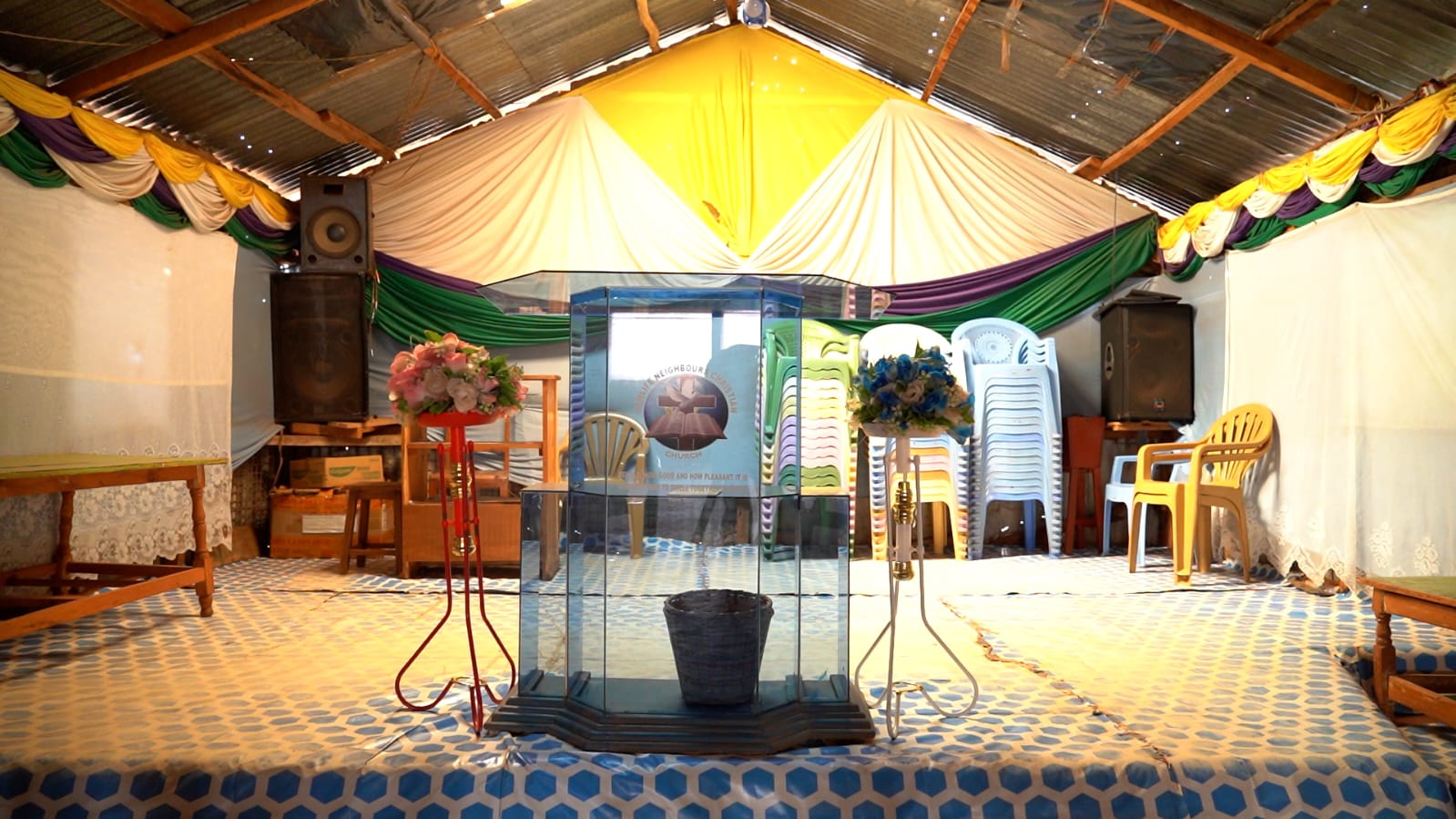
Small groups of worshippers began congregating in the middle of the chaos, renting stalls and erecting tin structures to hold prayers. According to Pastor Likoko, county authorities once considered converting the land into a market, but the plan never materialised.
Faith and Suspicion
The proliferation of churches has sparked scepticism. Critics point to the sheer number of pastors, each collecting offerings from impoverished residents, and question whether the churches are simply businesses in disguise.
Pastors, however, reject the accusation.
“It wasn’t our wish to be here,” said Pastor Likoko, who established his church in 2007 after breaking away from another ministry. “Land in Nairobi is very difficult to find. We just found stalls and began ministering. If I had money, I would have bought land elsewhere.”

His church pays Sh21,000 in monthly rent to landlords who own the stalls. Contributions come from market women selling kale, casual workers, and small traders offering what little they have. “This is not a business,” he insists.
Transformation on the Ground
For many residents, the impact of the churches has been tangible.
“Where there were once corpses in alleyways, there are now Sunday schools. Where gangs once slept drunk in doorways, choirs now rehearse in the evenings,” Pastor Likoko said. He added that couples in troubled marriages have reconciled and young people once drawn to crime now testify to being “saved.”
Everlyn Mwende, a community leader, sees the change in everyday life. Quoting scripture from Matthew 7:21, she says the diversity of congregations has not bred division.
“Every church has its own way of serving God. The way they pray there is not the same as how I pray here. But I’ve never heard of conflicts among them. They get along, no matter how loud the music is,” she said.
Mwende believes the churches have been especially important for women and single mothers. “Instead of going to the club to look for husbands, they can find guidance here. If I see my neighbour struggling, I call her and bring a pastor to help. They have supported us to raise children, even educate them.”
Still, she points out the biggest challenge remains lack of basic amenities. “We don’t have toilets. That is what we are asking the government and well-wishers to help us with,” she said.
Order in the Midst of Noise
Even amid the constant soundscape of singing and preaching, some order has taken root. Simon Njenga, a Nyumba Kumi head and landlord in the area, plays a gatekeeping role.

Before a new church can set up, he says, it must be introduced to the community and vetted. “We must know—who is this coming in? Otherwise bad people could misuse the name of the church,” he explained, recalling the infamous Shakahola tragedy in Kilifi where more than 400 people died after being lured into a cult.
An association of pastors also oversees activities, maintaining a measure of accountability in the crowded, vibrant settlement.
Kosovo’s “village of churches” remains noisy, improvised, and unconventional. But to those who call it home, it has become a sanctuary.
“God moved here,” Pastor Likoko says softly. “This place that was once full of death is now full of life.”